Blog · Part of the Growth and Marketing guide
Pinterest for OnlyFans: How to Drive Traffic with SFW Pins
How to use Pinterest to send traffic to your OnlyFans with safe-for-work pins, from Pinterest SEO and keywords to linking through a landing page.
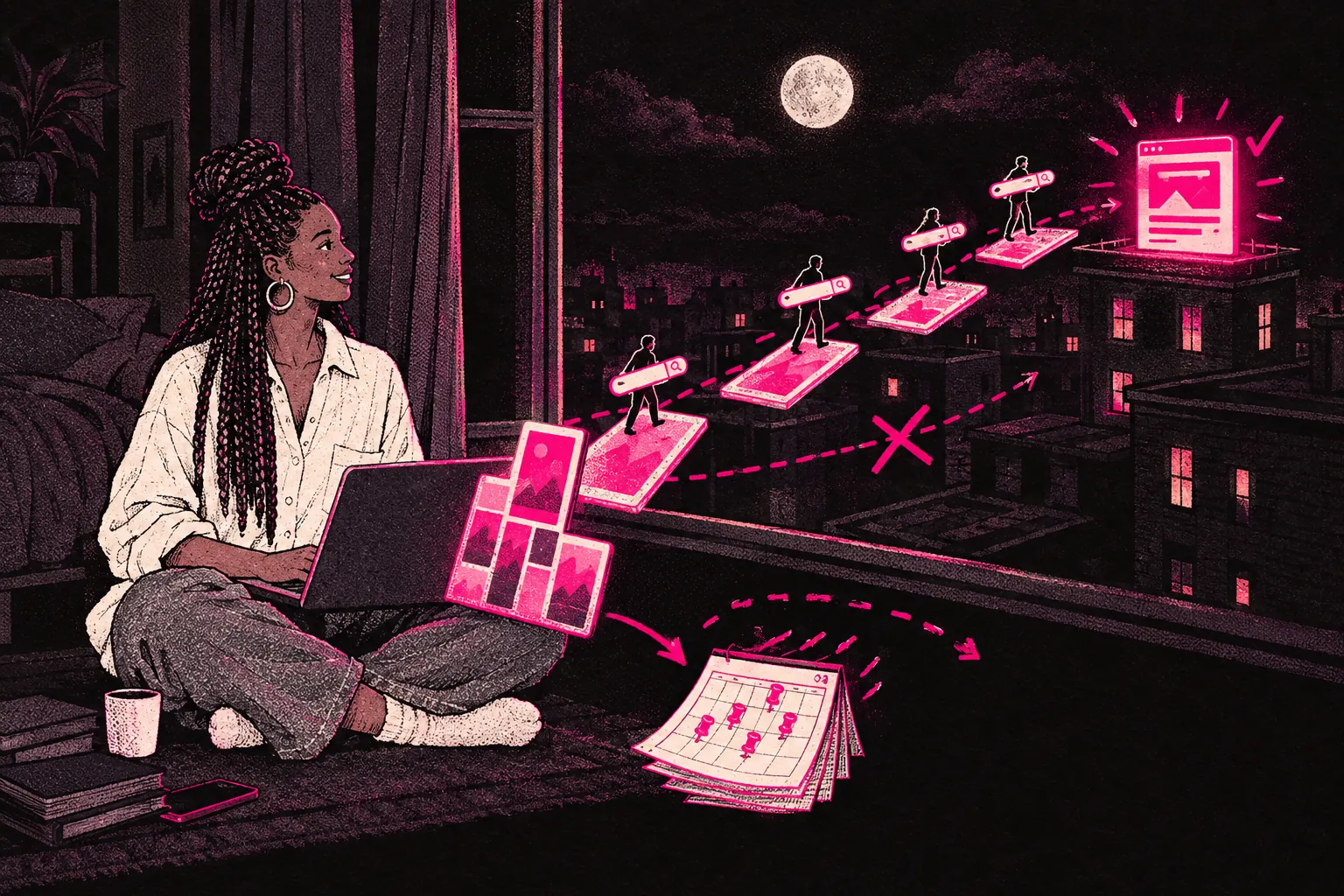
Pinterest can send steady traffic towards your OnlyFans page for months after you post, because people find pins through search. You can’t post explicit content there, and you shouldn’t link straight to OnlyFans, but safe-for-work pins that point to a landing page can keep bringing in visitors long after a tweet would have vanished.
When you think about promoting your page, the usual platforms probably come to mind: Twitter, Instagram, TikTok, Reddit. They all work, but they share a problem. They’re crowded with creators chasing the same audience, and their algorithms are hard to predict.
Pinterest works differently. Far fewer OnlyFans creators seem to use it, so there’s less competition for attention. And because it behaves like a search engine, a pin can keep drawing clicks for months, sometimes years.
Why most creators overlook Pinterest
A lot of people still think of Pinterest as a place for home decor and wedding planning. That was closer to the truth a decade ago, but the platform has changed a lot since. Pinterest now has over 450 million monthly active users searching for everything from fitness routines to fashion ideas to self-improvement.
Creators tend to skip it for a few reasons. They assume the audience is wrong for them, or they think it needs a completely different content plan, or it’s just never crossed their mind as a traffic source. None of those hold up well, and that gap is exactly why it’s worth a look. While everyone else fights for attention on Twitter and Reddit, Pinterest is far quieter.
How Pinterest works as a search engine
This is the big difference. Instagram, TikTok and Twitter are social media platforms. Their algorithms push content based on engagement, how new it is and who’s interacting with it. A post can be forgotten within hours.
Pinterest is a visual search engine. People arrive looking for something specific: outfit ideas, workout routines, aesthetic inspiration, beauty tips. Your pins show up in search results because they match what someone typed, and how recently you posted matters less. A pin you make today can still turn up in searches six months from now, still bringing in clicks.
That changes how you work. Forget going viral in the first hour. Make pins people can find through search, and let them build up over time. It’s closer to blogging than to social media marketing.
Content types that work
You can’t post explicit content on Pinterest, full stop. You can post content that builds your brand, shows off your style and makes people curious enough to find you elsewhere. Read Pinterest’s community guidelines before you start, because its rules on suggestive content are stricter than on some other platforms.
Fitness content
Workout routines, progress photos (within the guidelines), activewear outfit ideas and nutrition tips. Fitness is a popular topic on Pinterest, and it gives people a reason to follow you.
Fashion and styling
Outfit inspiration, lingerie styling guides (tasteful and non-explicit), seasonal fashion boards and accessory picks. Pinterest users go looking for style content.
Beauty and self-care
Makeup tutorials, skincare routines, hair styling ideas and product reviews. People search Pinterest for this kind of content all the time.
Lifestyle aesthetics
Mood boards, colour palettes, room decor and travel shots. This builds your personal brand without mentioning your creator work at all.
Motivational and personal development
Quotes, mindset posts, goal-setting ideas and confidence-building content. It can attract people who’ll want to follow you further.
What ties all of these together is that they show off you, your taste and your personality without being explicit. They make people wonder who you are and where they can see more.
Pinterest SEO: keywords, board titles, and pin descriptions
Because Pinterest is a search engine, SEO matters a lot. Whether a pin gets seen by thousands of people or by nobody often comes down to the words you use.
Pin titles
Make them clear and use the words people search for. Instead of “My Tuesday look,” try “Summer date night outfit inspiration.” Think about what someone would type into the Pinterest search bar.
Pin descriptions
Write 100 to 300 characters that work in relevant keywords naturally. Say what the pin shows, who it’s for and why someone would want to save it.
Board titles
Name your boards with terms people search for, and skip the in-jokes. “Gym outfit ideas” will beat “my gym diaries” because people search for the first one.
Board descriptions
Fill these in with keywords that match the board’s theme. Pinterest uses them to work out what’s on the board and who to show it to.
Hashtags
Pinterest supports hashtags, but they count for less than they do on Instagram. Two to five relevant tags per pin is plenty. Put your effort into the title and description.
Alt text
When you upload an image, fill in the alt text with a description of what’s in it. That gives Pinterest’s visual search more to go on when it sorts your content.
Creating pins that drive curiosity without violating TOS
Pinterest marketing for creators is about building intrigue. You want people to think “I’d like to see more from this person” without posting anything that breaks the platform’s rules.
Show your personality as well as your body
Pins that show your style, your surroundings and your taste give people more to stay interested in than pins that only rely on physical appeal. If you show your face, that counts too.
Use text overlays
Add text to your images that hints there’s more elsewhere. Lines like “full routine on my page” or “more outfit ideas on my site” give people an easy next step.
Create series
A board for “weekly outfit challenges” or “monthly fitness progress” gives people a reason to follow you and come back.
Lean on lifestyle content
A photo of you somewhere beautiful, well styled, with a caption that makes people curious, keeps people interested longer than a provocative photo that might get flagged.
Using Pinterest to build a brand persona
Pinterest is great for brand building because your boards add up to a whole look. Together, they say who you are, what you care about and what your world looks like.
Think of your profile as a mood board for your brand. Someone who lands on it should get your style, your interests and your personality straight away, and come away thinking “this person’s interesting, I want to know more.”
Make boards for different sides of your personality: fitness, fashion, travel, self-care. Each one adds depth to your brand and gives people another reason to follow you.
Linking strategy
This is where you need to be careful. Pinterest lets you add a link to every pin, which is useful. Linking straight to your OnlyFans page is risky, though. The link might get flagged and your account could be suspended. Even if it isn’t, someone who clicks a fitness pin and lands on an adult page is more likely to be put off than to subscribe.
Link to a safe landing page instead. That could be your link-in-bio page, a personal website or a blog. These pages sit between your safe-for-work Pinterest content and your creator platforms. They also let you collect email addresses, so you can reach people without depending on any one platform. Pinterest’s rules can still apply to where your links end up, so check its guidelines before you add them.
The path looks like this: your pin links to your website or landing page, which introduces your brand and gives visitors a few ways to follow you, including your OnlyFans page. People get a chance to learn about you before they hit a paywall, which is a gentler introduction than a cold link.
Pinterest analytics and what to track
Pinterest’s analytics are solid and show you what’s working. These are the numbers that matter most:
- Impressions: how many times your pins appeared in searches, feeds or boards. This tells you whether Pinterest is showing your content to people.
- Saves: when someone saves your pin to one of their boards, that’s a strong sign of interest. Saved pins can also show up for that person’s followers, which spreads your reach.
- Outbound clicks: how many people clicked your pin and went to your linked page. This is the one that turns straight into traffic.
- Top pins: see which pins get the most saves and clicks, then make more in the same style, topic or format.
- Search terms: Pinterest shows which searches led people to your pins. Use them to sharpen your keywords.
Check your analytics every week and adjust based on what they show. Make more of what works, and try something new where pins fall flat.
Time investment vs return compared to other platforms
One of Pinterest’s biggest advantages is how much you get back for the time you put in. On Instagram or TikTok, you have to post every day to stay visible. Pinterest rewards regular posting, but a quiet week won’t sink you. Five to ten pins a week is a reasonable pace to build momentum.
Most of the work also comes at the start. Once you’ve built a library of pins and set up your boards, the traffic builds on itself. Old pins can keep bringing in clicks for months, while a tweet drops out of feeds within hours.
Compared with the other platforms:
Twitter/X. Needs constant posting, lots of engagement and quick replies. A post lasts hours. Read more about promoting on Twitter.
Instagram. Needs daily Stories, regular Reels and active engagement, and the algorithm punishes gaps. See our Instagram strategy guide.
TikTok. Can bring explosive growth, but it’s unpredictable. A viral hit is hard to repeat, and the audience doesn’t always convert. Try our TikTok marketing guide.
Reddit. Works well but takes a lot of time and depends on each community. Our guide on promoting on Reddit covers it.
Pinterest. A fair amount of effort up front, not much upkeep, and traffic that grows over time. The downside is that results are slow. It’s often a few months before you see much traffic.
If you’re happy to think long term, Pinterest can be one of the best returns on your time. It won’t replace your other platforms, but it adds a steady source of traffic that keeps ticking over on the days you don’t post.
If you’re already juggling several platforms and want help pulling it all together, take a look at how we work with creators. A team that handles the marketing side means you aren’t trying to run every platform on your own.