Blog · Part of the Safety and Privacy guide
OnlyFans Copyright Protection: DMCA Takedowns and Ownership
You own the copyright in your OnlyFans content. What OnlyFans' licence covers, what subscribers can't do, contract red flags and how DMCA takedowns work.
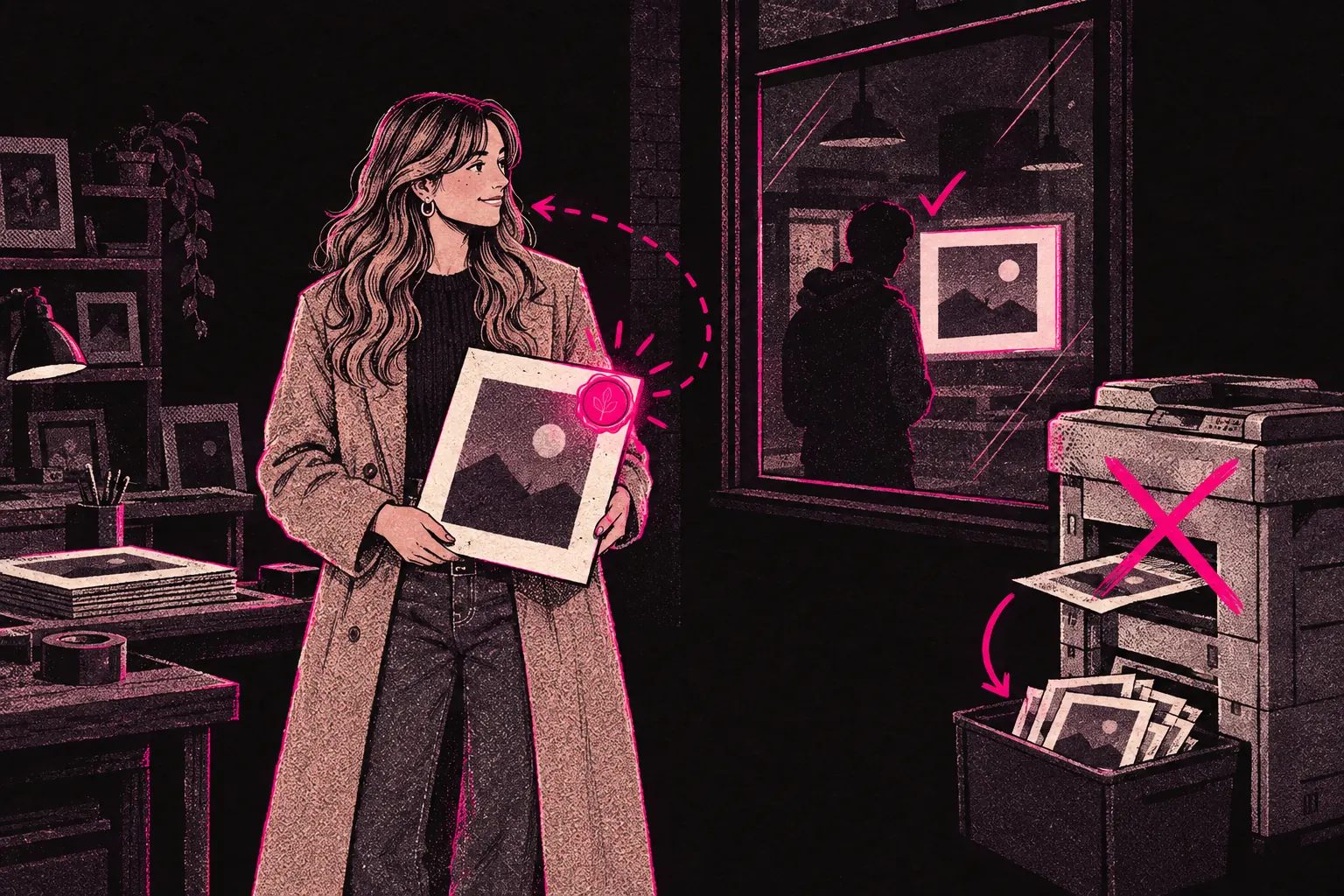
You own the copyright in your OnlyFans content, and uploading it doesn’t change that. OnlyFans only gets a licence to show it to your subscribers, and if someone shares it without permission, you can have it taken down with a DMCA notice.
It’s one of the first things new creators ask: who owns my content once I upload it? The answer’s reassuring, but the details matter. If you don’t understand the licence you’re granting, what subscribers can and can’t do, or how to enforce your rights when something goes wrong, you’re leaving yourself exposed.
You own your content. Full stop.
Under UK law, copyright exists automatically the moment you create an original work. You don’t need to register it, stamp it or file anything. As soon as you take a photo, record a video or write original text, you’re the copyright holder. That’s true whether the content sits on your phone, your hard drive or someone else’s platform.
Uploading to OnlyFans, or any other site, doesn’t change that.
What OnlyFans’ Terms of Service actually say
OnlyFans doesn’t claim ownership of your content. Its Terms of Service say you keep your rights to what you upload. What you do give OnlyFans is a licence to host, distribute and display that content on the platform. Without it, OnlyFans couldn’t show your posts to paying subscribers.
The licence is:
- Non-exclusive. You can post the same content anywhere else you like.
- Royalty-free. OnlyFans doesn’t pay you extra to display your work. It makes its money from the 20% of your earnings it keeps.
- Worldwide. It has to be, because subscribers use the platform from different countries.
- Revocable. Deleting content or closing your account is how you end it, but read the current Terms of Service for any exceptions, like copies held in backups.
This is standard platform wording. You’ll find very similar terms at Instagram, YouTube and most other content platforms. It doesn’t transfer ownership. It just lets OnlyFans do what you’re paying it to do.
What subscribers can and cannot do
A subscriber pays for access to your content. They don’t get ownership of it. They can view your content on the platform, and that’s all.
Subscribers have no right to:
- download your content (even if a device lets them save something, passing it on isn’t allowed)
- share, repost or redistribute your photos or videos
- upload your content to other sites
- screenshot your material to sell or trade
- use your content for any commercial purpose
A subscriber who does any of these is infringing your copyright, and you’ve got legal options, which are covered below.
Copyright when working with an agency
This is a fair worry. Some agencies put clauses in their contracts that assign some or all of your content rights to the agency. That’s a serious red flag.
A good agency doesn’t claim ownership of your content. Unless you sign your rights away, copyright stays with you. At TalentGrow, the team runs chat, posting and promotion through Infloww, a creator CRM, where it can see your stats, make posts and send messages. It can’t reach your bank details, payout information, email or social media accounts. The account stays in your name, payouts go to your bank, and you keep full control and can end our access at any time by changing your password. We invoice after you’ve been paid, and it’s month to month with no lock-in. Leak protection is included at no extra cost too, with active monitoring and takedown notices sent within hours.
If you’re reviewing an agency contract, look carefully for:
- any mention of “assignment” or “transfer” of intellectual property rights
- clauses that give the agency an irrevocable licence to your content
- terms that let the agency keep using your content after you leave
- anything that limits your ability to delete or move your own work
Our guide to how agencies work covers contract red flags in more detail. If a contract tries to take your IP, walk away.
How to protect your copyright
Owning your rights is one thing. Enforcing them is another. These steps help.
Watermarking
A visible or invisible watermark makes it harder for anyone to pass your work off as theirs, and easier for you to prove it’s yours if it turns up elsewhere. You don’t need expensive software. A simple text overlay with your username, or a small logo placed where it’s hard to crop out, does the job.
Keeping records
Keep a folder of your original files with their metadata intact. Timestamps, full-resolution originals and RAW files all count as evidence. If you ever need to prove a piece of content is yours, an original file with an earlier creation date than the stolen copy is strong proof.
Registering your copyright
Copyright is automatic in the UK, and there’s no official register. If you want extra proof, you can use a private registration service such as the UK Copyright Service, or a timestamping service. You don’t have to, but it can make disputes simpler.
Monitoring for leaks
Search regularly for your content turning up where it shouldn’t. Google reverse image search, leak-monitoring tools and simple alerts for your stage name are all ways to spot infringement early. Our post on dealing with content leaks goes through this in more detail.
What to do when someone infringes your copyright
If your content appears on another site without your permission, you’ve got options.
DMCA takedown notices
The DMCA is American law, but DMCA takedown notices are the standard way to get infringing content removed from most platforms, including many outside the US. Nearly every hosting provider and social media site has a DMCA process. You send a formal notice identifying the infringing content, and a US-based platform that ignores a valid notice risks losing its legal protection (known as safe harbour).
Our full guide to filing DMCA takedowns walks you through it step by step.
Reporting to the platform
Most platforms, OnlyFans included, have reporting tools for copyright infringement. Use them. People who infringe repeatedly can be banned for good.
Legal action
For persistent or large-scale infringement, you can take legal action. In the UK, you can bring a claim of up to 10,000 pounds in the small claims track of the Intellectual Property Enterprise Court (IPEC), and you don’t need a solicitor to do it. For bigger cases, a specialist IP lawyer can advise you on the best route.
Documenting everything
Before you ask for anything to be removed, screenshot the infringement with the URL showing, note the date you found it and keep a record of every message. You’ll need this if things escalate.
The practical takeaway
Your content is yours. Copyright law is clear on that, and the OnlyFans terms don’t change it. But your rights only protect you if you enforce them. Watermark your work, keep your originals, watch for leaks and act fast when someone infringes.
If you’re working with an agency, or thinking about one, make sure it leaves your ownership alone. No legitimate partner should ask you to sign away your intellectual property. You can see how our model works, or use our creator tools, including the earnings calculators and pricing guides, to plan your page on your own terms.
Got questions about protecting your content, or want a team to help run your page? Get in touch.