Blog · Part of the Money and Tax guide
OnlyFans PPV Strategy: How to Send and Track Paid Messages
How to plan your OnlyFans PPV: price by content type, tease before you send, time your sends, avoid fan fatigue and track the buy rate of each message.
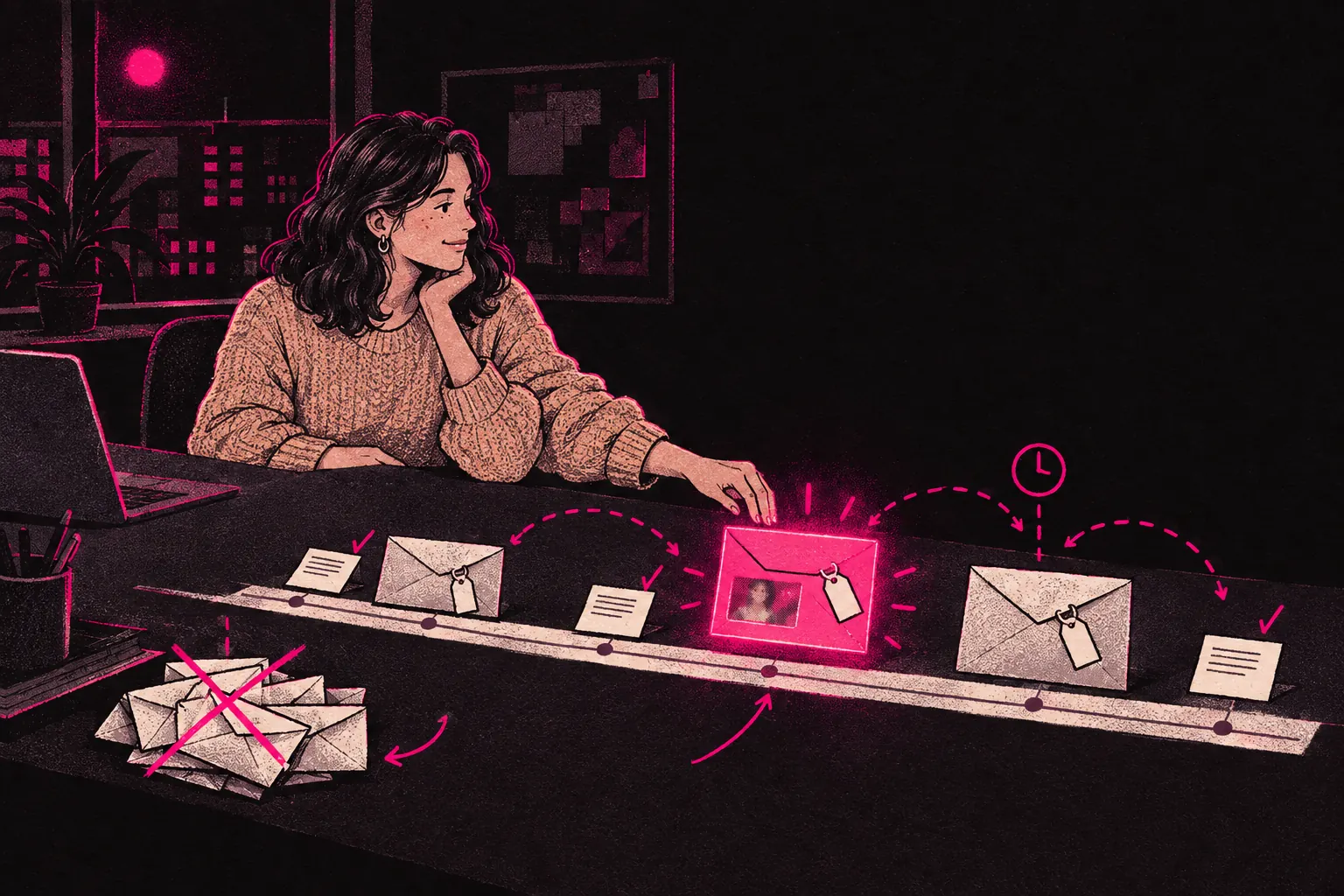
Price each PPV message for what’s in it, tease it before it lands, send it when your fans are around, and don’t send so many that fans stop opening them. PPV is often where most of a page’s money comes from, so it’s worth planning.
Your subscription brings fans in. A lot of the spending happens after that. One anonymised page behind our published statement earned $27,213 in 30 days, and just $23.97 of that came from subscriptions, because it was a free page. Even so, plenty of creators treat PPV as an afterthought: film something, pick a price, send it to everyone and hope.
Planning your PPV means deciding what you send, what you charge, when it goes out and who gets it. Get those right and the same content can earn you a lot more.
What PPV actually is and why it matters
A PPV (pay-per-view) message is a locked message fans pay to open. You attach photos, videos or audio, set a price, and send it to one fan or your whole subscriber list. Fans see your message and a preview, if you add one, but they can’t see the full content until they pay.
On a lot of pages, PPV brings in far more than subscriptions do. That’s because it isn’t capped by how many subscribers you have. You can send several PPVs a week, at different prices, to different groups of fans. So what you earn depends on how well you plan it, as well as on the size of your following.
Think of your subscription as the steady base that keeps fans on your page. PPV turns those subscribers into buyers who spend well beyond their monthly fee.
How to price different content types
Different content deserves different prices. Use the ranges below as a starting framework, then adjust them for your own page.
Short clips (under 2 minutes)
Price range: £5 to £10. These are impulse buys. A fan shouldn’t have to think hard about whether to buy one, so keep the price low enough that it’s an easy yes.
Short clips work well as frequent, low-risk offers that keep fans in the habit of buying. They’re also a good warm-up before a pricier drop.
Longer videos (3 to 10 minutes)
Price range: £12 to £25. This is the heart of your PPV. The price should match the length, the production quality and how exclusive the content is.
A five-minute video that’s obviously high effort and only available as PPV can justify £20 or more. A five-minute video that feels like what you already post on your feed should be cheaper, or fans will feel it isn’t worth the money.
Premium and extended content (10 plus minutes)
Price range: £25 to £50. Long, high-production content fans can’t get anywhere else. That might be extended scenes, special requests you’ve reworked for a wider audience, or content with especially high production value.
Keep these rare. If every PPV is priced at the top end, fans get tired of it and stop buying. Premium drops work best as occasional events, once or twice a month at most.
Photo sets
Price range: £5 to £15. A set of 5 to 15 photos, ideally from one shoot or theme. Photo sets work well as midweek sends between video PPVs, so money keeps coming in without you having to film a video every time.
Price them by the number of photos, how exclusive they are and how much work went into the shoot.
Tip menu items and customs
If a fan asks for something on your tip menu and you deliver it as a PPV instead of asking for a tip first, charge your menu price. When your tip menu and your PPV prices match, fans know where they stand and nobody feels short-changed.
Teasing before you send
The best PPV drops don’t come out of nowhere. Fans who know something’s coming, and are looking forward to it, are more likely to buy than fans who get a paid message out of the blue.
Ways to build anticipation:
- Post a teaser on your feed 24 to 48 hours before. That could be a behind-the-scenes photo, a short clip with “the full video drops in DMs tomorrow,” or just a text post that gets people curious.
- Mention it in your chats. If you’re talking to fans, drop hints: “I filmed something incredible yesterday, you’re going to love what hits your inbox tomorrow.”
- Use countdowns. “Sending something special at 8pm tonight” gives fans a reason to check their messages at a set time.
- Show previews. Attach a short, tempting preview to the PPV message itself. A fan who can see a taste of what they’re buying is more likely to pay than one looking at a blank locked message.
You want fans waiting for the PPV to arrive. When they’re expecting it, the message lands as something they’ve been looking forward to, and it doesn’t read like a cold sales pitch.
Timing your PPV sends
When you send a PPV matters as much as what’s in it. Your best content will still do badly if it lands at 3am on a Tuesday.
Start with evenings and weekends
Evenings and weekends are a sensible first guess, because that’s when a lot of people have time to relax and browse. Test them first, then let your own numbers decide.
Avoid Monday mornings and midweek afternoons
Plenty of fans are at work then, distracted and not in the mood to spend. Your PPV sits unopened and gets buried under other messages.
Check your own data
Every audience is a bit different. If a lot of your subscribers live abroad, your best send times could look quite different. Your OnlyFans statements show when each purchase came in, so look at when your PPVs sell and adjust.
Send high-value PPV when your page is busy
If you’ve been chatting with fans, posting on your feed and your page feels active, that’s a good moment for a PPV. Fans who are already paying attention are more likely to spend.
Frequency: the balance between revenue and fatigue
Sending too many is one of the most common PPV mistakes. If fans get a paid message every single day, they stop opening them. PPV fatigue is real, and it’s one of the quickest ways to lose sales.
A sensible starting point:
- 2 to 4 PPV sends a week. That’s enough to keep money coming in without wearing out your audience.
- No more than one a day. Even when you’ve got plenty ready, cap it at one paid send and space the rest out.
- Mix up the prices. If you send three PPVs in a week, don’t price them all the same. Try a £7 impulse buy, a £15 mid-range piece and maybe a £25 premium drop. That way fans judge each offer on its own, and they don’t get into the habit of ignoring every PPV.
If fewer fans are buying over time, you’re probably sending too often. Pull back for a few days, send some free content or just chat, then come back with a drop you’ve teased well.
Mixing free messages with paid
This one gets overlooked a lot. If fans only hear from you when you want money, they start to dread your notifications.
Mix your PPV with:
- Free content. Send an exclusive photo or short clip as a gift, with no paywall. It builds goodwill and keeps fans opening your messages.
- Real conversation. Ask questions, reply when they answer, and check in on your regulars. Show fans you like talking to them for more than their money.
- Teasers and announcements. Build excitement for what’s coming without asking for money in that message.
- Thank-you messages. After a fan buys a PPV or sends a tip, follow up with a personal thank you. It makes spending feel good, and a fan who feels appreciated is more likely to buy again.
A rough guide is 2 to 3 free or chatty messages for every paid one. It keeps things feeling balanced, and when a PPV does arrive, fans are open to it.
Creating urgency without being dishonest
Urgency works when it’s real. These approaches give fans a true reason to act now:
- Time-limited availability. “I’m deleting this from my vault on Friday” gives fans a deadline. If you say it, do it.
- Exclusive to a segment. “Only sending this to fans who’ve been subscribed for 3 plus months” makes it feel like a privilege.
- Limited numbers. “Only the first 20 fans who buy this get a free bonus clip” is real scarcity, and it rewards fans who move fast.
- Seasonal or event-based. Content tied to a date or an event has built-in urgency, because the moment passes.
What doesn’t work: slapping “limited time” on everything, never removing content you said you’d remove, or making up scarcity. Fans notice patterns. Repeat spending depends on trust, and a quick spike in sales isn’t worth losing it.
Mass PPV vs targeted sends
You can send PPV in two ways: as a mass message to all or most of your subscribers, or as a targeted send to particular fans or groups.
Mass PPV is efficient. One message, one bit of effort, and your whole list sees it. It suits general content that appeals to your full audience, and most of your PPV will probably go out this way.
Targeted sends earn more per fan who receives them, but they reach fewer people. You might send a piece only to fans who’ve bought similar content before, fans who’ve been chatting in DMs, or fans who’ve spent over a certain amount. Targeted sends tend to sell better because the content feels relevant to the person getting it.
The best approach is mostly mass sends for general drops, with targeted sends for niche or premium content. A fan who feels a message was picked for them is far more likely to buy than one who suspects it went to everyone.
For more on writing mass messages that sell, read our guide to OnlyFans mass messaging.
Tracking what works
You can’t improve what you don’t measure. After every PPV send, write down:
- The price you set
- The buy rate (the percentage of fans who received it and bought it)
- The total revenue
- The day and time you sent it
- How much you teased it beforehand
- Whether it was a mass send or a targeted one
Patterns show up over time. To take a made-up example, you might find £12 content sells to 40 percent of the fans who get it while £18 content sells to 22 percent, so the cheaper price brings in more money overall. Or you might find your Thursday evening sends beat everything else, week after week.
Those patterns belong to your audience. No guide can tell you exactly what your subscribers will buy. Tracking every send gives you real data to decide with, so you aren’t guessing.
Building a PPV system
PPV income gets steadier once you work to a system instead of sending at random. This is one example of a weekly rhythm:
- Monday: a free content drop or a chatty message to re-engage fans after the weekend
- Tuesday: tease upcoming content on your feed
- Wednesday evening: a mid-range PPV (£10 to £15)
- Thursday: free content or conversation, to keep the relationship going
- Friday: tease the weekend drop on your feed and in DMs
- Saturday evening: a premium PPV (£20 to £30)
- Sunday: a cheap impulse PPV (£5 to £8)
It’s only an example. Your schedule depends on how much content you can make, who your audience is and what your numbers tell you. What matters is having a rhythm, so you aren’t just sending whenever something happens to be ready.
For the bigger picture on moving fans from subscriptions to bigger purchases, our upselling guide covers the whole approach.
PPV is a skill, not a gamble
Pages that earn well from PPV usually have a routine for pricing, teasing, timing and sending that their fans respond to. They track the results and adjust as they go, and they treat PPV as a core part of the business.
Start with one or two ideas from this page. Track your results for a few weeks. Then add another. Over time, your PPV income gets more predictable and becomes a dependable part of what you earn.
If you’d like help building a PPV system for your page, TalentGrow’s chat team covers pages 24/7 and every creator gets a dedicated strategist. You can see how we work or apply whenever you’re ready.