Blog · Part of the Safety and Privacy guide
Protecting Yourself from Stalkers as an OnlyFans Creator
How to spot warning signs, protect your identity, and stay safe from stalking behaviour as an OnlyFans creator. UK law and practical steps.
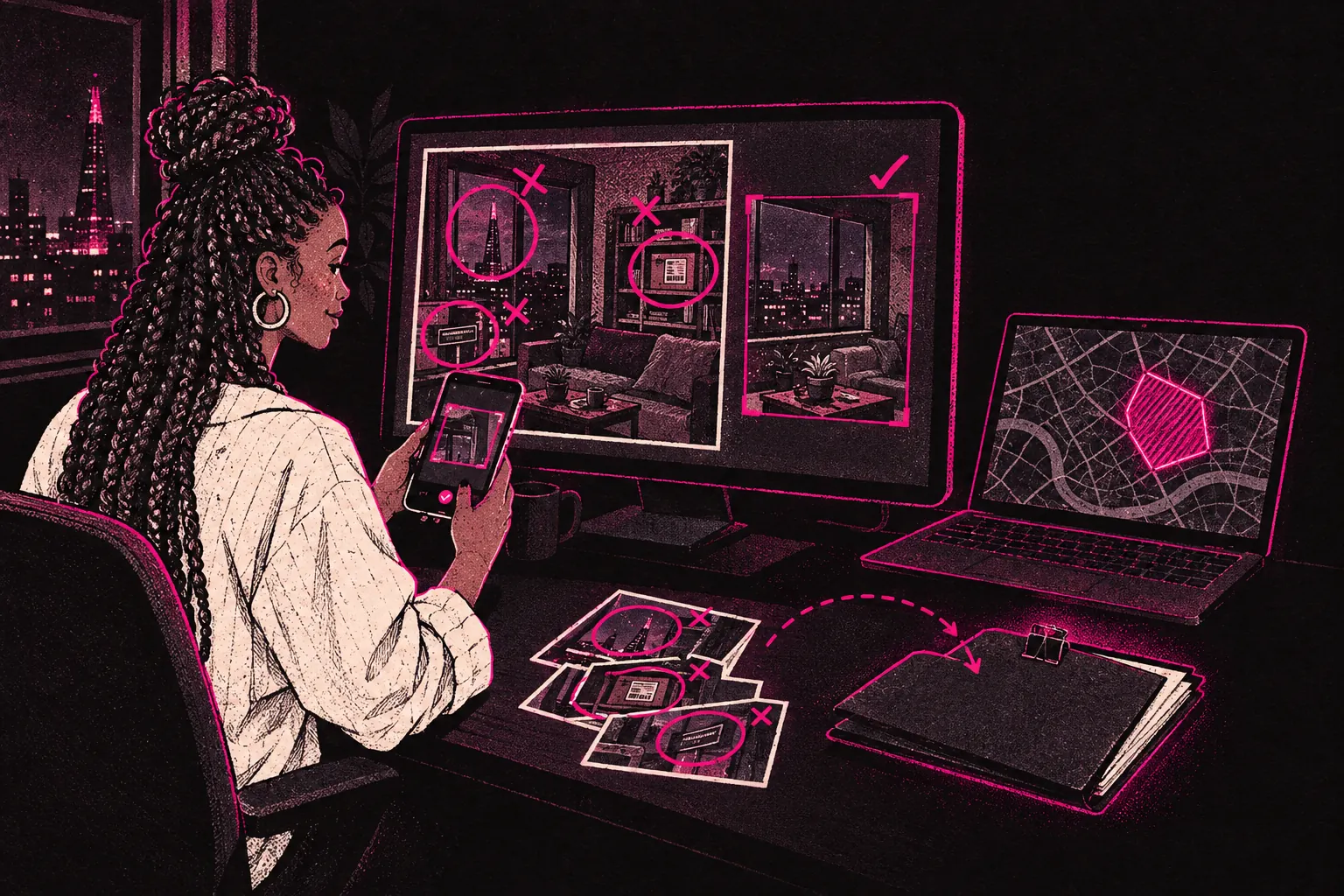
To protect yourself from stalkers as an OnlyFans creator, keep anything that could locate you out of your content, use geo-blocking and blocking early, hold firm boundaries in your messages, and keep evidence the moment a fan’s behaviour starts to worry you. If it crosses into stalking, report it. In the UK, stalking is a crime, including when it happens online.
OnlyFans involves a closeness with subscribers that most platforms don’t. That closeness is part of why fans pay, but it also brings risks you need to take seriously. Stalking is one of them.
This isn’t about scaring you. Most subscribers are perfectly reasonable people. But paid adult content can lead a few people to form an unhealthy attachment to the person behind the screen. If you know the early signs, you can act before things get worse.
Why online creators can become targets
On OnlyFans, fans can feel they have a real relationship with you, even though it’s one-sided. Subscribers pay for access to you. They message you directly. They get content made for them. For most, it’s entertainment. For a small minority, the line between fantasy and reality gets blurred.
The intimacy of adult content can feed that fixation in some people. The risk goes up when:
- You reply to messages often and personally
- You share details about your day, your location or your routine
- You offer very personal content that makes a subscriber feel they have a unique relationship with you
- You have a smaller subscriber base (a fan may feel more “special” than they would with a creator who has thousands)
None of this means you shouldn’t talk to subscribers. It means setting clear boundaries from day one.
Warning signs of obsessive behaviour
Spotting the early stages gives you time to act before things escalate. Watch for these.
Messaging too much
A subscriber who sends dozens of messages without a reply, messages at all hours, or gets agitated when you don’t answer straight away.
Acting as if they own your time
Messages saying they deserve more attention because they pay, or that you “owe” them something beyond what they bought.
Personal questions that push boundaries
Asking where you live, what area you’re in, which gym you go to, what your real name is. One question might be innocent. A pattern of digging isn’t.
Jealousy of other subscribers
Getting angry that you talk to other fans, or wanting to be your “only” subscriber.
Bigger and bigger gifts
Tips or gifts that keep getting more expensive, along with expectations of a deeper relationship.
Trying to move off the platform
Asking for your personal phone number or social media, or asking to meet in person.
Anger at boundaries
Hostile replies when you turn down a request or enforce a rule.
Any one of these on its own might be harmless. When several turn up together, or the behaviour gets more intense over time, take it seriously.
Practical steps to protect your identity and location
Your first defence is making sure nobody can find you in real life from what you share online.
- Strip metadata from all content. Photos and videos can carry hidden data, including GPS coordinates and details about your device. Remove it before you upload anything. Most smartphones let you turn off location tagging, and there are free tools to remove metadata on desktop and mobile.
- Never give away location details. That includes things in the background of photos (street signs, distinctive buildings), check-ins on social media, and passing mentions of your neighbourhood or the places you go.
- Use a stage name with no link to your real identity. Not a version of your real name, and not a nickname anyone who knows you would recognise. For the full picture on staying anonymous, read our post on whether OnlyFans creators can be anonymous.
- Keep your creator life and personal life completely separate online. Use different email addresses, different phone numbers and, if you can, different devices. Our creator kit covers how to set this up.
- Use a PO Box or virtual address for any post. Never give your home address to any service connected to your creator work.
Using geo-blocking and OnlyFans privacy features
OnlyFans has several tools that help protect your identity.
Geo-blocking lets you hide your page from people in particular countries, and in some cases particular regions. If you want to stop people in your home country or local area finding your page, set this up before you launch.
Blocking a user stops them seeing your page and contacting you there. If someone makes you uncomfortable, block them. You don’t need a better reason.
Watermarking your content makes it harder for someone to reuse your images elsewhere without credit, though it won’t stop screenshots.
Two-factor authentication should always be switched on, so nobody can get into your account without your second login step.
For more on platform security, read our full guide on whether OnlyFans is safe.
Managing boundaries with subscribers
Setting clear boundaries is part of doing this job well. Decide in advance what you will and won’t talk about. A simple rule is to never discuss your personal life, real locations or anything that could identify you. If it’s a blanket rule, you don’t have to make a judgement call in the moment.
Think about using a tip menu to set out exactly what subscribers can buy. It draws a clear line around what’s on offer and leaves less grey area for someone to push on.
When a subscriber crosses a line, be firm and brief. You don’t owe anyone an explanation. “I don’t discuss personal details” is enough. If it carries on after a warning, block them and don’t engage any further.
What to do if you suspect you are being stalked
If a subscriber’s behaviour has gone from uncomfortable to frightening, or you think someone is trying to find you in real life, do these things.
Document everything
Screenshot every message, save every interaction, and note dates and times. Don’t delete anything. This evidence matters if things get worse.
Block them everywhere
On OnlyFans, on any social media accounts you use for promotion, and anywhere else they can reach you. Save your evidence before you block, in case messages disappear.
Secure your accounts
Change your passwords, turn on two-factor authentication everywhere, and check that none of your personal information has leaked.
Tell someone you trust
A friend, a family member or your management team. Don’t deal with this on your own.
Report it to the platform
OnlyFans has a reporting system for harassment and threats. Use it.
UK law on stalking and harassment
In England and Wales, stalking is a criminal offence under the Protection from Harassment Act 1997 (as amended by the Protection of Freedoms Act 2012). It covers behaviour online as well as offline. Scotland and Northern Ireland have their own stalking laws, and you can report to the police in any part of the UK.
Stalking doesn’t have to involve someone being physically near you. Examples of stalking behaviour in the Act include contacting or trying to contact someone by any means, monitoring their use of the internet, email or other electronic communication, and publishing material about them. A subscriber who keeps contacting you after being blocked, tries to find out your real identity or threatens to share your content may be committing a criminal offence.
The basic stalking offence (section 2A) is dealt with in the magistrates’ court and can lead to a prison sentence. Stalking that involves fear of violence, or serious alarm or distress (section 4A), carries up to 10 years.
Reporting to police and gathering evidence
If you decide to report it, the more evidence you have, the better. Police need something concrete to work with.
Gather:
- Screenshots of all the relevant messages, with dates and times showing
- Records of blocked accounts coming back under new usernames
- Evidence of attempts to find out your real identity or location
- Any threats, whether spelled out or hinted at
- A timeline showing how the behaviour has escalated
Call your local police on 101 (non-emergency), or 999 if you think you’re in immediate danger. Ask for the case to be recorded as stalking specifically, and not only as harassment. The National Stalking Helpline (0808 802 0300) gives free, confidential advice and will talk you through your options.
How an agency acts as a buffer
A management agency can put a layer between you and your subscribers. When a team handles your messages, someone other than you is reading the inbox, and they can flag escalating behaviour early and deal with it calmly. Ask any agency you’re considering how its chatters spot and handle a fan who’s becoming a problem.
At TalentGrow, a UK-based chat team covers your page 24/7 in three 8-hour shifts, with written handovers between them. A worrying fan’s history carries over to whoever picks up next, and nothing sits waiting until you log in. Every creator also has a dedicated strategist.
The team works in your account through Infloww, a creator CRM, where it can see your stats, make posts and send messages. It can’t see your bank or payout details, your email or your social media accounts. The account stays in your name, payouts go to your bank, and you keep full control and can end our access at any time by changing your password. We invoice after you’re paid. It’s month to month with no lock-in and no exit fees, and you give 14 days’ notice to leave.
If something does escalate, you won’t be dealing with it on your own.
You can learn more about how our management works, or read our post on preventing doxxing as an OnlyFans creator for more security steps.
Your stalking prevention checklist
You may never have to deal with a stalker, but set up your protection now anyway. Strip metadata, switch on geo-blocking and two-factor authentication, decide your boundaries, and block early when a fan’s behaviour worries you. If you want help putting these protections in place, or you’re dealing with a difficult subscriber now, get in touch with our team.