Blog · Part of the Money and Tax guide
Free vs Paid OnlyFans Page: Which Makes More Money?
Should your OnlyFans page be free or paid? A breakdown of both models, when each works best, and how to decide which is right for you.
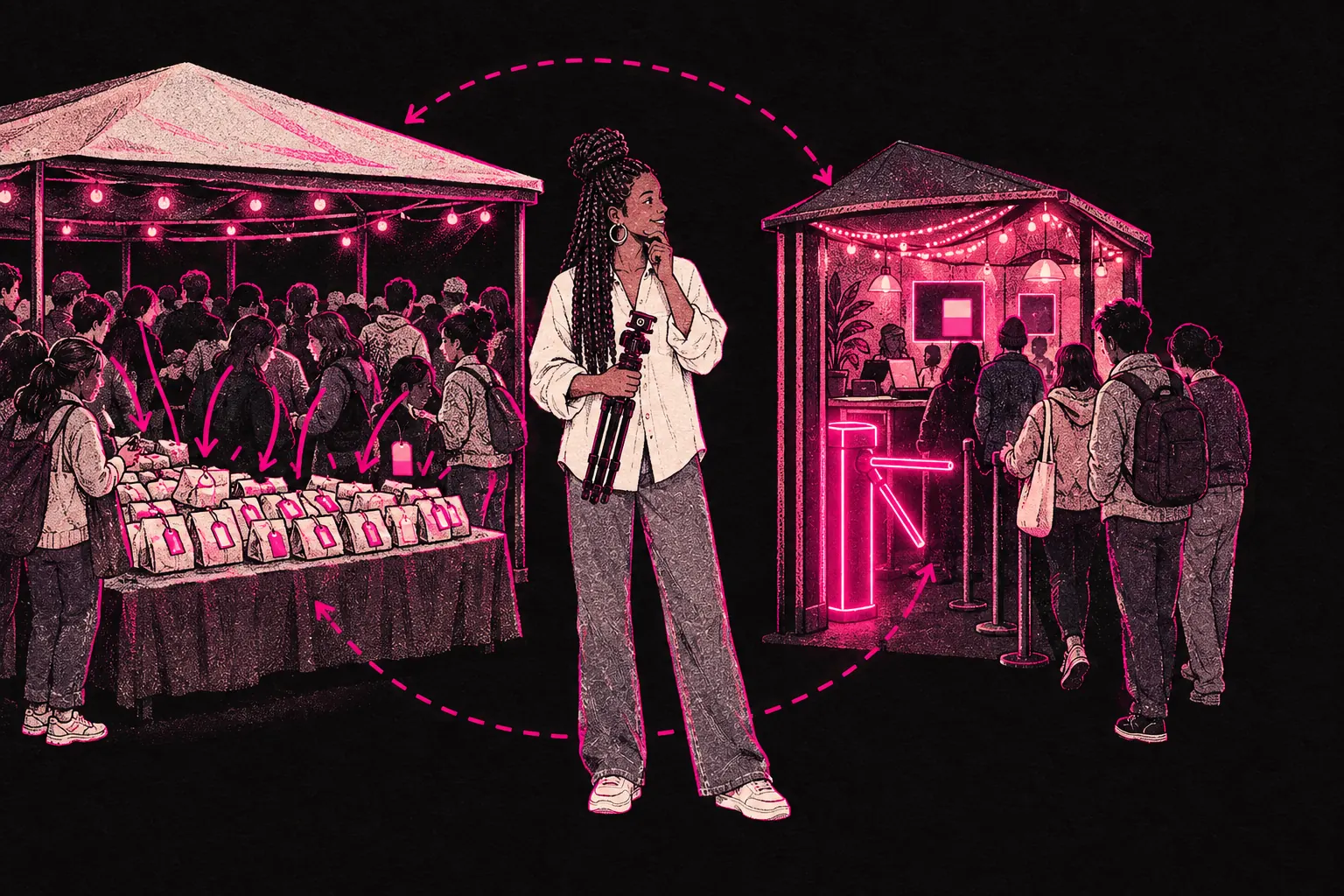
Neither a free nor a paid OnlyFans page makes more money by default. A free page earns from PPV, tips and custom content, usually across a bigger audience. A paid page adds a monthly subscription, usually from a smaller one.
It’s one of the first choices you’ll make as a creator, and it shapes how you make money, who subscribes and how your income grows over time. Both models work. The right one depends on your content, your audience and how you want to spend your time.
How free pages make money
A free page doesn’t mean you give everything away. Anyone can come in, and you earn from what happens once they’re inside.
The main ways a free page earns:
- Pay-per-view (PPV) messages. You send locked content straight to subscribers, and they pay to unlock it. This is usually the biggest source of income on a free page.
- Tips. Fans tip on posts, during livestreams or just because they feel like it.
- Custom content. Photos, videos or other requests made to order for one fan. Customs usually sell for more, because they’re made for one person.
- Paid promotional posts. Some creators charge other creators for a shoutout or a feature on their page.
The free model depends on volume. Plenty of people who follow a free page will never spend anything, so you need a bigger subscriber base. Your job is to turn free followers into paying fans through your messages, your content and the relationship you build with them.
If you’re working out your prices, the pricing calculator and tip menu builder let you set rates that make sense for your niche.
How paid pages make money
A paid page charges a monthly subscription. Unless they came in through a trial link, everyone who joins has paid before they see a post.
Revenue on a paid page usually comes from:
- Subscription fees. Regular income from each subscriber, and the base everything else sits on.
- PPV content. You can still send premium content as locked messages for an extra fee. A common setup is regular content on your wall and your most exclusive material saved for PPV.
- Tips and customs. These work the same way on both models.
- Bundles and discounts. Three or six month subscription bundles at a small discount keep fans subscribed for longer.
A paid page can give you steadier income, as long as subscribers keep renewing. If you have 200 subscribers at a set monthly price, you know roughly what your baseline is before any extras. The trade-off is a higher barrier to entry. Fewer people will subscribe than would follow a free page, but the ones who do have already put money in.
The subscriber psychology behind each model
This is where the two models differ most.
People follow a free page because it costs nothing, so they haven’t committed much. Many will never spend a penny. Some will, though, and because they’re paying for a specific piece of content they want, they may spend more on it than they’d pay for a month’s subscription.
People on a paid page have already decided to pay. They may be more likely to interact with your content and less likely to waste your time. But some feel they’ve “already paid” and push back on extra PPV or tips.
Neither is better or worse. You just sell differently. On a free page you have to go after sales. On a paid page you have to give people enough each month that they keep paying.
The hybrid approach
Some creators run a free page and a paid page at the same time. It works like this.
- Your free page is the way in. It’s open to everyone, gives people a taste of your content and points the most interested fans towards your paid page.
- Your paid page is where your best content lives. Fans who want more can upgrade, and they already know what they’re getting.
You get the reach of a free page and the regular income of a paid one. The catch is more work, because you’re running two pages with a separate content plan for each.
If you go this way, explain what each page includes, so nobody feels misled when the free page doesn’t have what they expected.
Which model suits which creator?
A free page tends to work better if you:
- Are just starting out and need to build an audience quickly
- Have a big social media following you can send over
- Are comfortable with direct messaging and selling, since PPV will be your main income
- Would rather let your content and personality do the selling once people are in
A paid page tends to work better if you:
- Already have an audience that knows and trusts you
- Want steadier monthly income
- Would rather spend less time selling in DMs and more time making content
- Are in a niche where fans expect to pay for access
The hybrid model tends to work better if you:
- Have the time and content to keep two pages going
- Want both reach and regular subscription income
- Are ready to grow beyond a single page
Pricing your paid page
If you go paid, think about both ends of the range.
- Too low, and you’re underselling your work. The price may not cover the time you put in.
- Too high, and you shrink your audience before anyone has seen what you offer.
There’s no standard price. What works depends on your niche, how much you post, what the subscription includes and how much extra you sell through PPV.
A few things to weigh up:
- Check what similar creators in your niche charge. You don’t have to match them, but you should know the range.
- Start in the middle and adjust. Running a promotion or lowering your price is easier than raising it without losing subscribers.
- Use bundles. A three-month bundle at a small discount gets fans to pay for three months up front.
The pricing calculator goes through this in more detail.
Conversion rates and what to expect
On a free page, only a small share of subscribers will spend regularly. Don’t go by someone else’s percentage. Work out your own: if you have 1,000 free subscribers, count how many bought something last month. Then track what those paying fans spend. A small group who spend a lot can still add up to a good income.
On a paid page, the conversion happened at sign-up, so what matters is keeping people. Check your statistics each month to see how many of last month’s subscribers renewed. Posting regularly and talking to your fans gives them reasons to stay.
When to switch models
Sometimes the model you started with stops working, or your situation changes. That’s fine. Switching doesn’t mean you got it wrong.
Common reasons to move from free to paid:
- You’re burned out from constant messaging and PPV sales
- You’ve built a loyal core of fans who’d pay a subscription
- You want steadier income
Common reasons to move from paid to free:
- Your subscriber count has stalled and you need new traffic
- You want to reach more people and upsell from there
- Your niche has moved towards free pages
If you’re not sure and you’ve got time for two pages, running both lets you test each model.
How to choose between free and paid today
Ask yourself two things. How much of your week do you want to spend selling in DMs, compared with making content? And do you already have fans who’d pay just to get in? Your answers point you to one model, and you can change it later if it stops fitting.
If you’d like help working out pricing and content for your page, get in touch. Our team works in your account through Infloww, a creator CRM, where it can see your stats, make posts and send messages. It has no access to your bank details, payout information, email or social media accounts. The account stays in your name, payouts go to your bank, and you keep full control and can end our access at any time by changing your password.