Blog · Part of the Money and Tax guide
Imposter Syndrome on OnlyFans: How to Stop Undercharging
How imposter syndrome shows up on OnlyFans, from undercharging to over-delivering, and how to price your work fairly and raise prices in small steps.
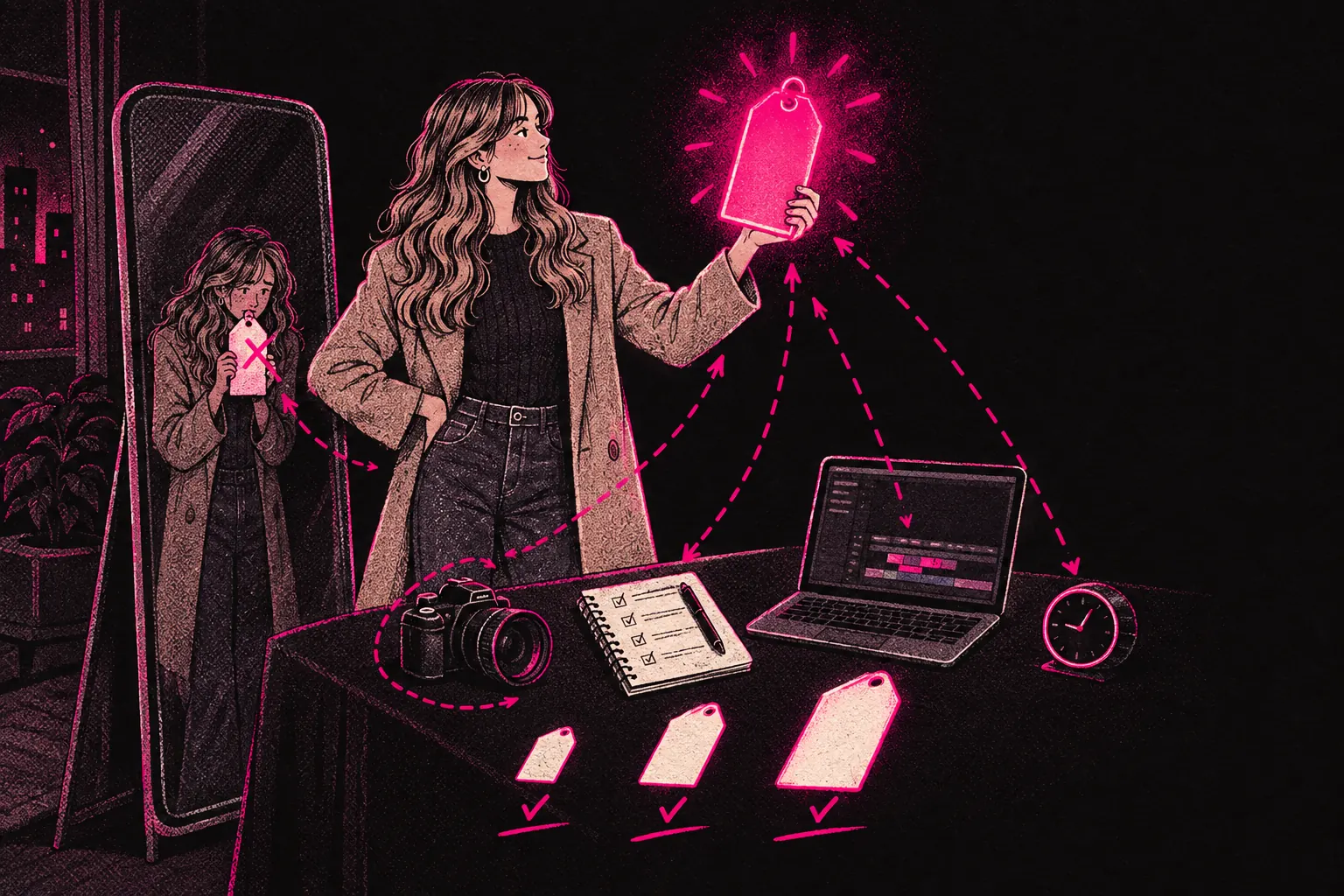
If you feel like a fraud on OnlyFans and keep pricing yourself low because of it, that’s imposter syndrome, and it’s very common, even among creators who are doing well. Writing down the work you put in, pricing for that work and raising prices in small steps can make charging feel a lot less frightening.
It usually sounds like this. You’ve got a page. People subscribe. Fans message you, buy your content and tell you they love what you do. And still there’s a voice in your head saying: “I don’t deserve this. Someone’s going to realise I’m not good enough. I should charge less. I should be grateful anyone subscribes at all.”
What imposter syndrome looks like for creators
Imposter syndrome goes deeper than nerves or modesty. It’s a belief that keeps coming back: that you’re somehow fooling people, that your success is a fluke, and that you haven’t earned what you’ve got.
For OnlyFans creators, it tends to show up in a few familiar ways.
Undercharging
You set your subscription price, PPV prices or custom content rates lower than they should be, because you don’t feel your content is “worth” what others charge. Other creators deserve to charge more, you think, but you don’t.
Over-delivering
You keep giving more than you promised because you feel guilty about charging what you already charge. You send free content to paying subscribers in case the subscription alone isn’t enough. You say yes to requests that go past what you’re comfortable with, because you feel you owe it.
Putting your success down to luck
“I only grew because of one viral post.” “People only subscribe because of my looks. I’m not good at this.” You brush aside the work and planning behind your results.
Avoiding promotion
You don’t post about your page, because deep down you’re embarrassed to ask people to pay. You undersell yourself in captions, bios and messages. Promoting yourself feels arrogant, even though your page can’t grow without it.
Constant comparison
You look at other creators and feel you’re a different kind of person from them. As if they belong here and you don’t. As if they earned their success and yours was an accident.
If any of this sounds familiar, imposter syndrome may be part of it. And it could be costing you money and peace of mind.
Why undercharging hurts your business
The most obvious cost of imposter syndrome is undercharging. It matters more than you might think.
It attracts the wrong audience
A very cheap page can fill up with people who came for the price. If you charge what your content’s worth, everyone who subscribes has decided it’s worth that much to them.
It makes you resent the work
Work hard for less than you should earn and resentment builds. You start to feel taken advantage of, even though you set the prices. That resentment turns into burnout, and burnout is a big reason people quit.
It sets a baseline that is hard to raise
Fans get used to the price you started at. If you start low and try to raise your rates later, some of them will push back. It’s easier to price fairly from the start.
It undercuts the market
When experienced creators undercharge, new creators looking at their pages may take that as the going rate and price themselves low too. Your pricing affects more people than you.
Building confidence in your pricing
A motivational quote won’t make you confident about what you charge. Writing down what goes into your work, and pricing for it, gives you something solid to point to.
Audit what you actually do
For one week, write down everything that goes into running your page:
- Planning content and coming up with ideas
- Setting up, shooting and editing
- Writing captions and scheduling posts
- Replying to messages and chatting with fans
- Promoting yourself on social media
- Handling customs and special requests
- Keeping on top of admin and money
Now look at that list and check whether your prices reflect all of it. You’re running a business with a lot of moving parts, and your subscription, PPV and custom prices have to cover the work behind them as well as the content.
Look at what comparable creators charge
Do it to get your bearings, not to copy them. If creators with similar content, a similar posting schedule and a similar audience size charge a lot more than you, ask yourself whether there’s a clear reason for the gap, like a bigger following or more content. If there isn’t, test a higher price.
Our pricing strategy guide and pricing calculator help you compare your prices with what the market will pay.
Test incremental increases
If raising prices scares you, start small. Put your subscription up by a couple of dollars. Nudge your custom rate up a little. Then watch your renewals and new subscribers for a few weeks. If they hold steady, you’re earning more for the same work, and the next increase will feel less frightening.
Stop apologising for your prices
This one’s subtle, but it matters. Don’t put “I know it’s expensive but…” in front of your prices. Don’t offer discounts nobody asked for because you’re worried someone will think you’re not worth it. State your price and let the work speak for itself.
If you keep catching yourself justifying your rates, our guide to custom content pricing covers how to set and share prices without hedging.
Recognising your value
Imposter syndrome tells you that you’re the exception, that everyone else deserves success and you somehow don’t. Look at what you’re doing, though.
Showing up has value. Posting on schedule and replying to fans week after week is a skill, and it’s harder than it looks from outside. You’re still doing it, and that counts.
Your creativity has value. Coming up with ideas, pulling them off and making them fun to watch is creative work. It takes taste and effort, even when it looks easy to your audience.
Your emotional labour has value. Chatting with fans, holding your boundaries, bringing energy on days you don’t feel it. That’s work, and it deserves fair pay.
Your business skills have value. Marketing, pricing, building an audience, reading your stats, managing money. You’re practising skills plenty of people never learn, and they’re worth something.
Your audience chose you. Nobody tricked them or forced them. They subscribe because they like what you offer. Believing they’ve all made a mistake is the imposter syndrome talking.
Overcoming comparison
Comparison keeps imposter syndrome going. Every time you look at another creator and think “they’re better than me”, you feed the belief that you don’t belong.
A few ways to look at it differently:
- You see their finished posts and none of the work behind them. You don’t know how long it took, how many takes they needed, who helped, or what their setup looks like off camera.
- Their success doesn’t take anything from you.
- Different doesn’t mean worse. Your style, personality and approach are your own. Fans who want what you offer aren’t necessarily the fans who want someone else.
- Comparing your third month with someone else’s twelfth isn’t fair on you.
If comparison keeps getting to you and it’s hurting your motivation, look at other creators’ numbers less. You don’t need to know their subscriber count or earnings. Watch your own progress.
The practical takeaway
Reading a blog post won’t make imposter syndrome disappear. It tends to ease as you gather experience, and evidence of your own progress. But you can start making decisions as if you deserve success, even while part of you doesn’t believe it yet.
Charge fairly. Promote your page without apologising. When fans compliment you, take the compliment. Track your growth, so you’ve got evidence to hold up against the doubt.
And if the business side is part of what makes you feel out of your depth, you don’t have to work it all out alone. TalentGrow supports creators with strategy, pricing, promotion and growth. It’s month to month with no lock-in. The team needs access to your account to do that work, but the account stays in your name, payouts go to your bank, and you can end our access at any time by changing your password.
Get in touch if you’d like to talk about what that support could look like.