Blog
Mental Health and OnlyFans: Looking After Yourself
Practical mental health advice for OnlyFans creators. Recognise common challenges, build healthy habits, and know when to seek professional support.
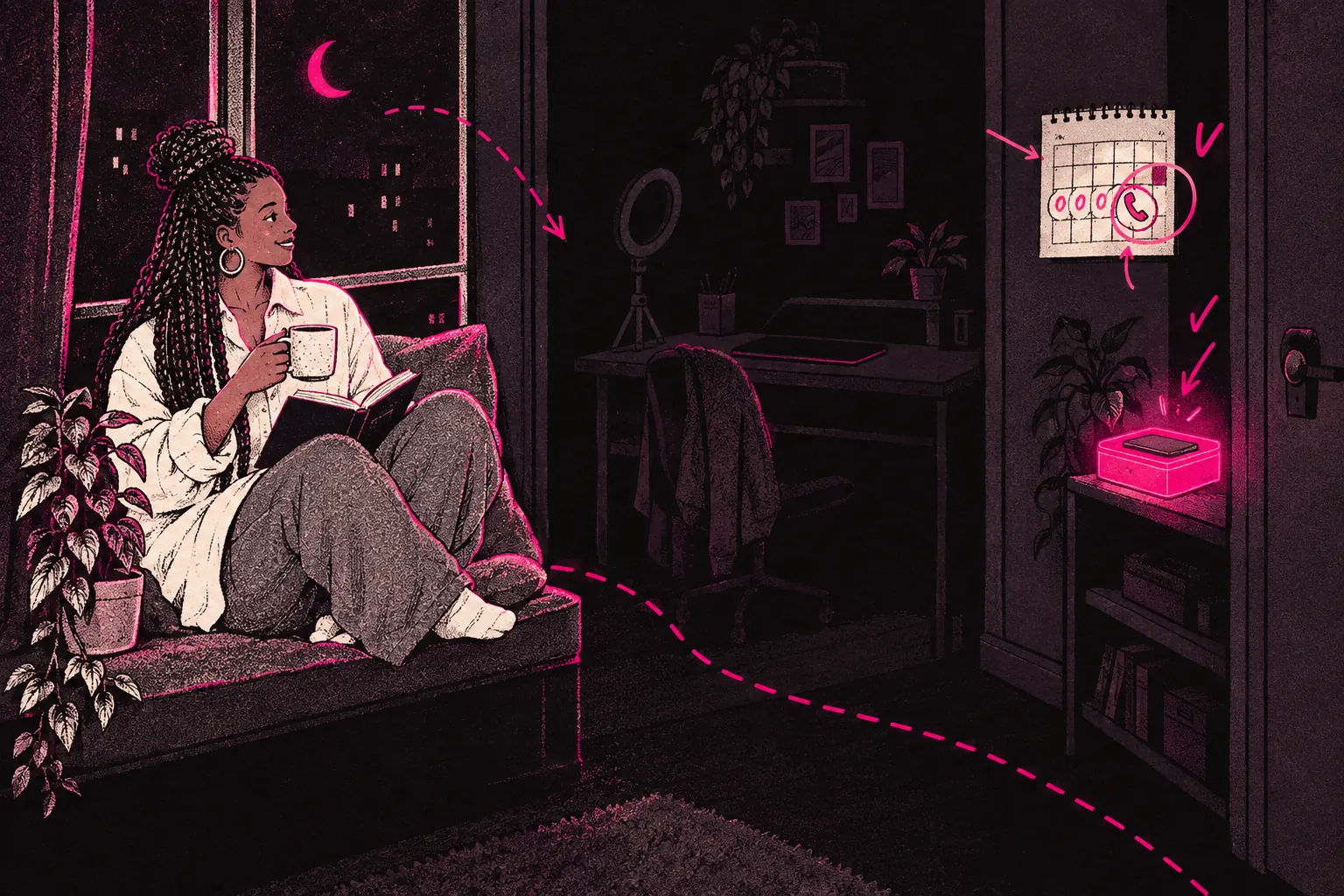
Looking after your mental health as a creator comes down to three things: knowing the pressures this work puts on you, building habits and limits that protect you, and getting professional help when those aren’t enough. Running an OnlyFans page is real work, and like any job it affects how you feel. The difference is that the product is you: your body, your personality and your time. That closeness brings pressures people outside the industry often don’t understand.
Below you’ll find the common problems, what helps and when to get support.
Common mental health challenges for creators
If you recognise yourself in any of these, you’re not unusual.
Comparison
Almost everyone does it. You see someone else’s numbers, their growth or their content, and you feel like you’re falling behind. But you’re comparing your behind-the-scenes with their highlight reel. You don’t know their expenses, their hours, who helps them or how long they’ve been at it.
Comparison hits hard here because the numbers are on show. Subscriber counts, likes and tips make it easy to measure “success” and feel like yours falls short. If this is a pattern for you, our piece on imposter syndrome goes into how to handle it.
Pressure to always be available
Fans expect replies. Pages that go quiet lose subscribers. Taking time off feels risky. Put together, it can feel like you’re never allowed to switch off. You’re not imagining that pressure. A subscription page depends on fans feeling that you’re around.
That’s why limits and routines matter so much. They protect your mental health. More on that below.
Isolation
A lot of creators work alone, often from home, and often with nobody in their daily life who understands the work. You can’t always talk about your job at a dinner party. Friends and family might not get what you do, or might be uncomfortable with it.
That isolation builds up over time. It can start to feel like you’re living a double life, and that’s exhausting even when both halves of your life are fine on their own.
Identity confusion
When your online persona pays the bills, the line between who you are and who you play can blur. You might start to feel that your worth as a person depends on your subscriber count or how you look. It doesn’t, but it can feel very real when you’re in the middle of it.
Negative interactions
Plenty of fans are respectful. Some aren’t. Harassment, fans pushing your limits or plain nasty comments all take a toll. One bad message can wreck an otherwise good day, especially if you’re already feeling fragile.
Stigma
Knowing that some people judge your work, even people you care about, sits in the background and wears on you. Nobody has to say anything to your face. The chance of being judged is draining on its own. If this is what you’re dealing with, we’ve written a separate piece on dealing with stigma.
What actually helps
Knowing about a problem doesn’t fix it. These are practical things you can start doing this week.
Set non-negotiable working hours
This is one of the most useful changes you can make. Decide when you start and when you stop. Outside those hours, your creator accounts don’t exist. You don’t check messages and you don’t think about content. You’re off.
That’s easier said than done, especially at first. But being half at work all the time is worse for your mental health and for your content. If you need help building a schedule, our guide to time management for creators has practical ways to plan your week.
Batch your content
Making content every single day wears you out. Content batching means shooting several days or weeks of content in a few focused sessions, then scheduling it. That gives you long stretches when you’re not shooting and can rest.
Build a separation between you and your persona
This looks different for everyone. The idea is to put some distance between the real you and the creator you.
Some things that help:
- Use a different name or handle for your page.
- Keep some physical boundaries, like not shooting in the bedroom you sleep in.
- Change your clothes or your routine when you start and stop work.
- Remind yourself often that your numbers don’t decide your worth.
Limit your exposure to other creators’ metrics
You don’t need to know what everyone else is doing. Unfollow, mute or leave any space that keeps making you feel like you’re not good enough. Protecting your headspace isn’t weakness, and it leaves you better able to do good work.
Move your body
Exercise won’t cure a mental health problem, but it’s one of the most dependable daily habits for feeling better. It doesn’t have to be hard. Go for a walk, a swim or a stretch. The point is to spend some time in your body doing something that isn’t work.
Maintain relationships outside of creator life
Friends, family, partners, hobbies and groups you belong to all count. Keep putting time into the parts of your life that have nothing to do with content. They remind you who you are when you step away from the screen.
If your work has made your relationships complicated, our guide to managing relationships as a creator talks through how to handle that.
Talk to someone who understands
Other creators can be a big help because they understand without you having to explain. An online community, a group chat or even one friend in the industry you trust can make a real difference. You don’t have to deal with all of it alone.
When to seek professional help
Looking after yourself matters, but it isn’t always enough. Think about speaking to a therapist or counsellor if:
- you’ve felt low, anxious or numb most days for more than a couple of weeks
- you’re relying on alcohol, drugs or other habits to get through the day
- you’re having thoughts of harming yourself or feel like things aren’t worth carrying on with
- you can’t stop working even though you know you’re burned out
- your relationships are falling apart and you don’t feel able to fix them
- you’re having panic attacks, problems with eating, or sleep problems that aren’t getting better
If you’re having thoughts of harming yourself, don’t wait for a therapy appointment. Speak to your GP today, contact Samaritans, who are free and there day or night, or go to A&E if you’re in immediate danger.
A therapist doesn’t need to specialise in content creators to help you, though some do. What matters is finding someone who won’t judge you or make you feel ashamed of your work. If your first therapist makes you feel worse about what you do, find another one.
In England, you can refer yourself to NHS Talking Therapies without going through your GP. There’s also plenty of private therapy online, which can feel more comfortable if you’re worried about confidentiality.
Building a sustainable routine
Looking after your mental health in this work doesn’t mean getting rid of all stress. It means setting things up so the work doesn’t grind you down over time. In practice, that looks like:
- a schedule with real time off in it, not just slightly less work
- boundaries you stick to once you’ve set them
- relationships that give you energy instead of draining it
- a sense of who you are beyond your page
- ways of earning that don’t need you “on” every waking hour
If the business side is what’s overwhelming you, that’s the part a management team can take off your hands. At TalentGrow, the team handles marketing, fan chat and strategy so you can focus on making content. To do that, the team works in your account through Infloww, a creator CRM, where it can see your stats, make posts and send messages. It has no access to your bank details, payout information, email or social media accounts. The account stays in your name, payouts go to your bank, and you keep full control and can end our access at any time by changing your password. It’s month to month with no lock-in and no exit fees, and you give 14 days’ notice if you want to leave.
You are not weak for struggling
This work is demanding. If you’re struggling, it doesn’t mean you’re not cut out for it. The work asks a lot of you, and you deserve support, whether that’s better routines, firmer boundaries or professional help.
Take your mental health as seriously as you take your page.
If you’re burning out and want to talk about what support could look like, get in touch. A person will reply within 24 hours.